
Updated November 24, 2026 02:27PM
On November 23, Grand Canyon National Park Superintendent Ed Keable announced his plan to retire at the end of 2026, after more than six years overseeing the park.
“As Geoffrey Chaucer wrote, ‘All good things must come to an end.’ So, too, my time at GRCA,” Keable wrote in a November 23 email to park employees obtained by Arizona Public Radio station KNAU. In the email, he confirmed that his last day will be December 31 and that agency leaders are working to identify an acting superintendent to take over on January 1.
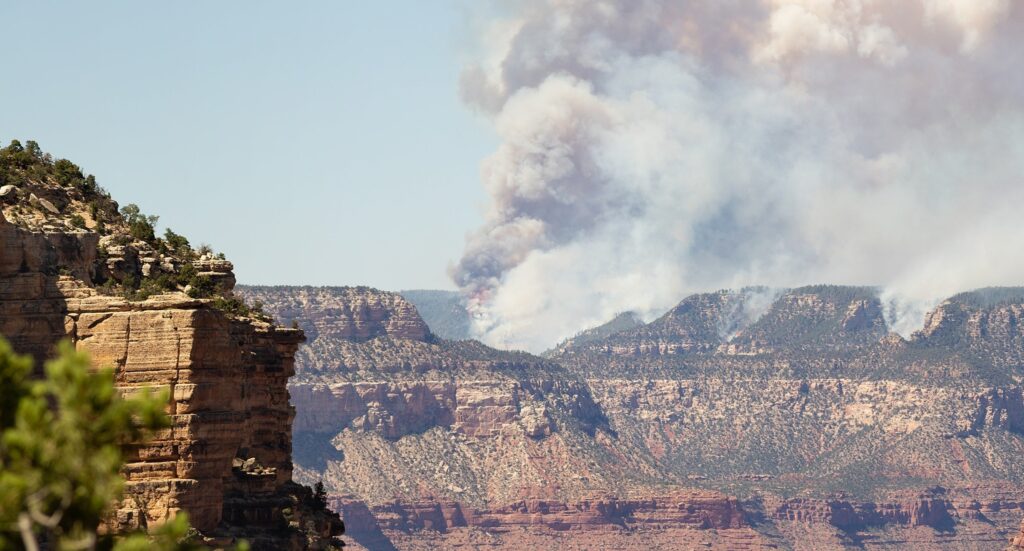
Keable’s announcement came just ten days after the Department of the Interior released a damning 65-page investigative report detailing how leadership failures, inadequate preparation, and communication breakdowns contributed to the devastating 2025 Dragon Bravo Fire, which destroyed 114 structures on the park’s North Rim, including the historic Grand Canyon Lodge.
The investigation drew on interviews with more than 70 people and a review of over 18,000 documents, including fire management plans and communication logs.
Keable’s retirement email made no mention of the Dragon Bravo Fire or the Interior Department’s investigative report.
“I have made this decision for very personal reasons,” Keable wrote.
Outside contacted Keable and the National Park Service for comment but did not receive a response as of the publishing of this story.
A Controversial Hire
A career government attorney, Keable spent 23 years in the Interior Department’s Office of the Solicitor, including eight years as assistant solicitor of general law, before his appointment in April 2020 during President Donald Trump’s first administration. He had no previous experience working for the National Park Service.
The Coalition to Protect America’s National Parks, an organization representing current and former park service employees, issued a statement on April 3, 2020, criticizing Keable’s selection the same day the NPS announced his appointment.
“Ed Keable is not qualified to manage and lead a complicated park such as the Grand Canyon,” Phil Francis, then-chair of the coalition, said in the statement.
In the appointment announcement, NPS Deputy Director David Vela praised Keable’s leadership abilities and cited his experience within the Interior Department as an asset to the park.
‘Foreseeable, Preventable’ Failures on the North Rim
Sparked by lightning on July 4, 2025, the Dragon Bravo Fire burned more than 145,000 acres over nearly three months and cost an estimated $141 million to suppress, according to the federal report. Investigators concluded that “the most consequential drivers were not environmental,” finding that many of the challenges the NPS and firefighters encountered during the blaze were “foreseeable, preventable, and reflective of broader institutional issues.”
In the report, investigators determined that “leadership roles did not align with expertise or decision making authority.” As the fire’s agency administrator, Keable was responsible for overseeing firefighting strategy and authorizing suppression tactics.
Under NPS guidelines, superintendents at wildfire-prone parks are expected to qualify for that role within two years of their appointment. Five years into his tenure, Keable still lacked that qualification, the report said. Although qualified administrators were available locally, the park didn’t bring one in until July 30, nearly four weeks after the fire ignited.
Keable initially approved a strategy known as confine and contain, which involves keeping a wildfire within designated boundaries rather than extinguishing it entirely. The approach conflicted with 2025 federal guidance against managing wildfires for ecological benefit, though investigators indicated that Keable had not received that, the report said.
Park leadership reaffirmed the strategy twice over the next five days, during which the fire breached planned containment lines.
“Continued authorization of the confine and contain strategy did not reflect awareness of changing conditions or escalating risk,” investigators wrote.
Communication failures also delayed firefighters’ efforts to slow the blaze using aerial fire retardant. Keable authorized retardant drops on July 13, once an earlier request from firefighters was clarified, but by then, the Grand Canyon Lodge had already burned.
The report stopped short of assigning individual fault. “The Dragon Bravo Fire should be understood as a warning event,” the report stated. “The findings demonstrate outcomes were shaped less by tactical execution than by NPS systemic issues related to authority, qualifications, and decision processes.”
As Outside reported in April, Interior Secretary Doug Burgum suggested that full suppression might have prevented hundreds of millions of dollars in property losses, though wildland firefighters noted that the canyon’s steep terrain initially made ground operations unsafe.
A Massive Rebuild Awaits Keable’s Successor
The National Park Service advertised Keable’s position on November 24, with applications closing December 8 and an annual salary ranging from $162,740 to $228,000. Responsibilities include overseeing wildland firefighting, emergency medical services, and backcountry rescues.
The job hunt comes at a pressing time for the national park. A devastating flash flood on August 29 destroyed trails and infrastructure along the Colorado River and led to three deaths. Facilities on the South Rim went without running water for nearly two months until the park restored water service to six lodges on November 20.
Among the next superintendent’s biggest challenges will be rebuilding the North Rim. Earlier this month, the park service concluded a public comment period on three preliminary redevelopment concepts for the area. Congress is also considering the North Rim Restoration Act, which would give the park service greater contracting flexibility to expedite reconstruction.
Sections of the fire-damaged North Rim reopened to visitors in May, but the August flash flood hindered reconstruction efforts, washing out trails and damaging bridges and critical infrastructure. The entire North Kaibab Trail and Cottonwood Campground remain closed, and Phantom Ranch’s lodging closure has been extended through January 31, 2027.